

Why Riverside County’s Economic Development Strategy Matters to Temecula Valley Businesses
A forward-looking roadmap shaping growth, talent, and opportunity for Temecula Valley businesses within a rapidly evolving Riverside County economy.
On April 2, 2026, the Southern California Wine Country EDC welcomed Kimberly Wright, Economic Development Manager for Riverside County Office of Economic Development, for a comprehensive presentation on the County’s newly approved Comprehensive Economic Development Strategy (CEDS). While the strategy operates at a countywide level, its implications are both immediate and meaningful for businesses throughout the Temecula Valley.
This plan is more than a framework. It is a roadmap that aligns investment, workforce development, and infrastructure priorities in ways that directly influence the region’s economic vitality and competitiveness.
A Unified Vision That Strengthens Local Opportunity
One of the most significant takeaways is the level of coordination embedded in the CEDS. Developed through extensive engagement with more than 125 business and community leaders across the county, the strategy reflects a shared vision for economic growth.
2026 - 2030 Riverside County Economic Development Strategic Plan
For Temecula Valley businesses, this alignment matters. It ensures that local priorities, whether related to workforce, infrastructure, or industry growth, are connected to broader county and federal initiatives. This unified approach enhances access to funding opportunities through the U.S. Economic Development Administration and positions local projects for greater visibility and support.
A Growing Economy with Clear Areas for Improvement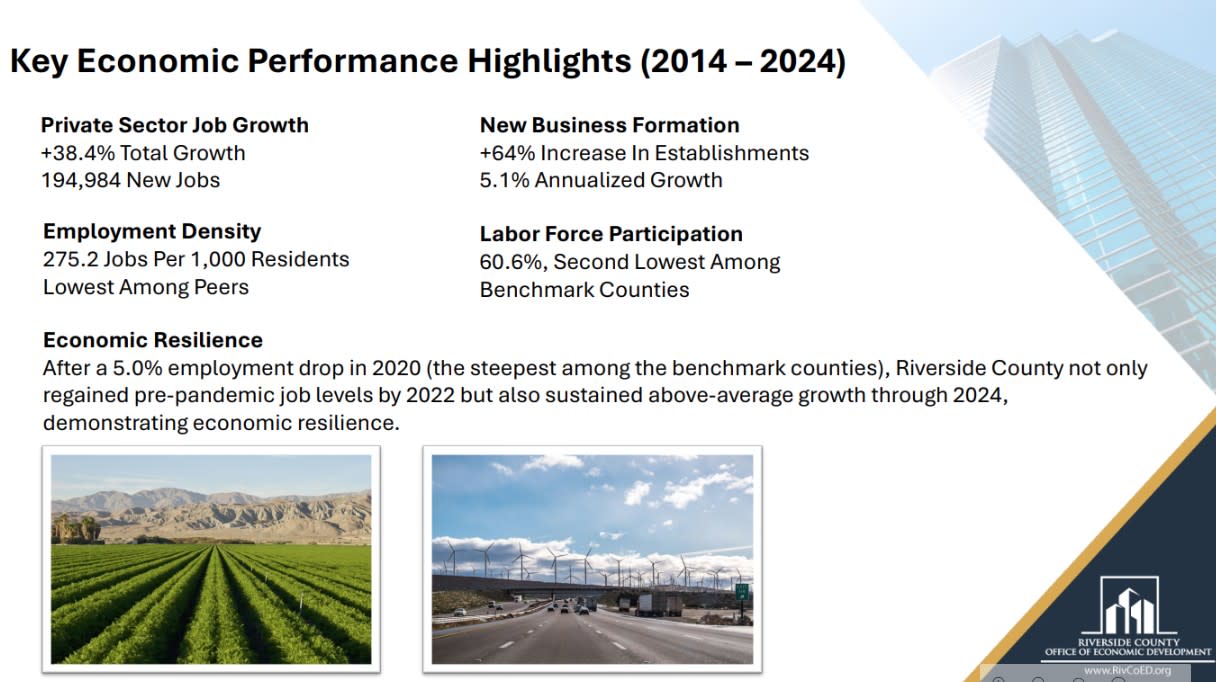
Riverside County’s economic performance over the past decade demonstrates strong momentum. The addition of 195,000 private sector jobs and a 64 percent increase in business formation signal a dynamic and expanding economy.
However, the data also underscores challenges that are highly relevant at the local level. Many residents continue to commute outside the county for higher-wage employment, reflecting a gap between available jobs and workforce skills. Infrastructure constraints, including transportation and utilities, must also keep pace with growth.
For Temecula Valley employers, these realities highlight both a challenge and an opportunity: the ability to help shape a more locally rooted workforce while advocating for the infrastructure needed to sustain business expansion.
Click here for the Interactive Data Center.
Target Industries That Align with the Region’s Strengths
The CEDS identifies eight priority industry sectors, many of which align closely with the assets and opportunities already present in the Temecula Valley.
Industries such as advanced manufacturing, life sciences, clean energy, and hospitality and tourism present clear avenues for growth. The inclusion of hospitality and tourism is particularly notable, as it reinforces the importance of wine country, agritourism, and destination experiences as economic drivers.
At the same time, emerging sectors such as cybersecurity, digital media, and AgTech point to opportunities for diversification and innovation. For local businesses, this signals where investment, partnerships, and workforce development efforts are likely to be concentrated in the coming years.

Workforce Development as a Central Priority
A key pillar of the strategy is “People,” with a strong emphasis on workforce alignment and labor force participation. With participation rates around 60 percent, Riverside County is actively working to reduce barriers to employment.
Efforts such as expanded childcare access, workforce training programs, and transportation solutions are not abstract policy goals. They are practical initiatives that can directly impact business operations by improving access to talent.
For employers in the Temecula Valley, engagement in these efforts, whether through partnerships, training programs, or advocacy, will be essential to building a sustainable and competitive workforce pipeline.
Tools and Resources Available to Businesses
The County is not only identifying priorities; it is also deploying tools to support implementation. Businesses have access to a range of resources, including workforce training programs, financial incentives, and digital platforms that provide real-time data on demographics, site selection, and investment trends.
- Workforce Training Partnerships: On-the-Job Training Incentives
- Financing Help
- Foreign Trade Zones
- Manufacturing Incentives
- Demographics Portal
- Business Resource Guide
- How To Start A Business in Unincorporated Riverside County
- Site Selection Tool
Additionally, programs such as Business Assistance Now have already supported more than 1,800 companies, offering guidance on permitting, financing, and growth strategies. These resources are particularly valuable for small and mid-sized businesses navigating expansion or operational challenges.
Collaboration as a Competitive Advantage
A recurring theme throughout the presentation was the County’s commitment to collaboration. Partnerships among cities, educational institutions, utilities, and the private sector are not only encouraged but actively structured within the strategy.
This level of coordination has been recognized as a competitive advantage, particularly in attracting international investment. For the Temecula Valley, it reinforces the importance of regional engagement and collective advocacy in securing resources and advancing shared priorities.
What This Means for the Temecula Valley
The Riverside County CEDS is not a distant policy document; it is a living strategy that will shape funding decisions, infrastructure investments, and industry growth across the region.
For businesses in the Temecula Valley, the implications are clear:
- Greater access to funding and incentives tied to aligned regional projects
- Increased focus on industries that complement the Valley’s strengths
- Expanded workforce development initiatives to address hiring challenges
- Enhanced infrastructure planning to support long-term growth
- Stronger regional collaboration that elevates the Valley’s economic position
As the strategy moves toward formal presentation before the County’s Board of Supervisors and into full implementation, continued engagement from the business community will be essential.
Looking Ahead
The success of this strategy will depend on sustained collaboration, data-driven decision-making, and active participation from stakeholders at every level. Temecula Valley businesses are well positioned to play a leading role in this process.
By staying informed, leveraging available resources, and engaging in regional initiatives, the business community can help ensure that the Temecula Valley remains not only competitive, but a driving force within Riverside County’s next chapter of economic growth.